 A global problem
Photo:
Ari O. Laine
Introduction
of non-native or "alien" species has been identified by scientists and
policymakers as one of the major threats to marine ecosystems. Living organisms
are transferred outside their natural distribution both intentionally and
unintentionally through shipping, aquaculture, fisheries, stocking, recreational
activities and opening of new water links.
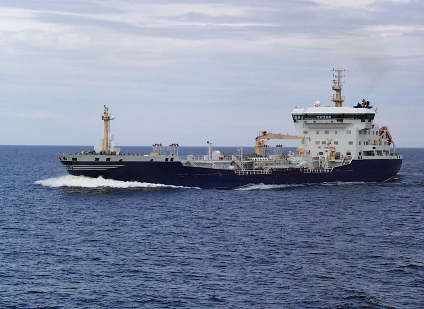
Ballast water and fouling of ship hulls are considered as principal vectors of alien species transmission, and at any one time 4000-10 000 species of viruses, bacteria, algae and animals are travelling over the distances.
The sensitive Baltic Sea
The Baltic Sea with its low number of native species and simple food webs is vulnerable to ecological changes and offers excellent opportunities for detailed studies in invasion biology.
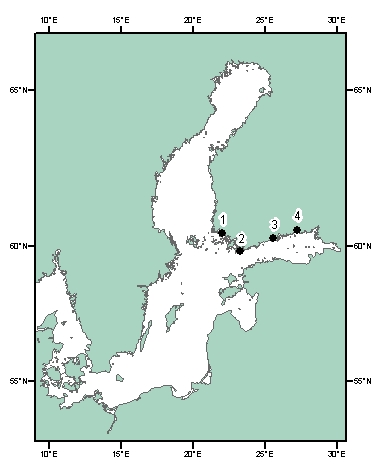
The Gulf
of Finland is a hot spot area for introductions, because its salinity gradient
allows both fresh- and brackish-water organisms to establish and numerous
geographical or man-made invasion corridors open to it. The risk for introductions
will increase further as the new ports in the NE Baltic will be opened:
a 4-fold increase in ship traffic in the Gulf of Finland is expected from
1990 to 2010.
Baltic Sea as recipient and donor area
Picture:
Marjo Pienimäki
More
than 100 alien species have been recorded in the Baltic. Some 70 of them
have established reproducing populations, and 20 can be regarded as harmful.
Once 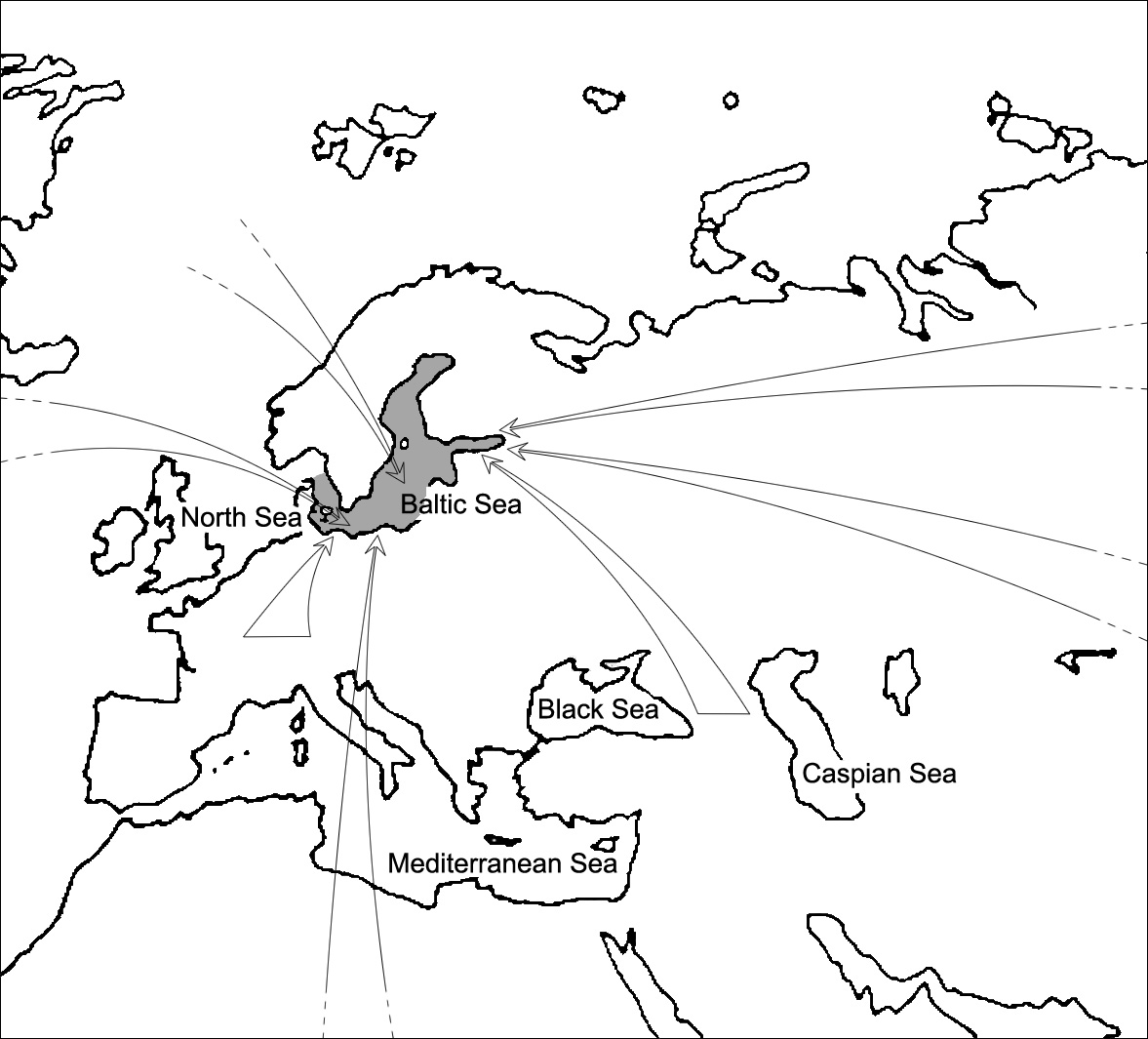 established,
the removal of the species from the system is nearly impossible, and the
area can also act as a source to secondary introductions to adjacent and
remote water bodies.
established,
the removal of the species from the system is nearly impossible, and the
area can also act as a source to secondary introductions to adjacent and
remote water bodies.
Diverse impacts
Bioinvasions have economical, recreational and ecological impacts. Ecologically they affect both structural and functional biodiversity of the sea. In principal every successful introduction alters somehow the ecosystem, either by altering existing or adding new functions, or in the worst case, by replacing native organisms.
Thus the
theoretical framework of this project will be based on the threats to biological
integrity, defined as the capability of supporting and maintaining a balanced,
integrated and adaptive biological system.
Picture:
GEBCO Digital Atlas and World Vector
Shoreline,
the US Defense Mapping Agency